AccessibilityWordPressTesting Tools
ADA Compliance Plugins and Testing Tools
Which accessibility plugins, browser tools, and monitoring platforms are worth using, what overlays really do, and where manual testing has to take over.
- Find issues fast: free tools that scan any page in seconds.
- Catch problems as you publish: WordPress plugins that check content in the editor.
- Avoid false confidence: why a widget does not make a site compliant.
Certified and trusted since 2001 5.0 client rating Google Partner
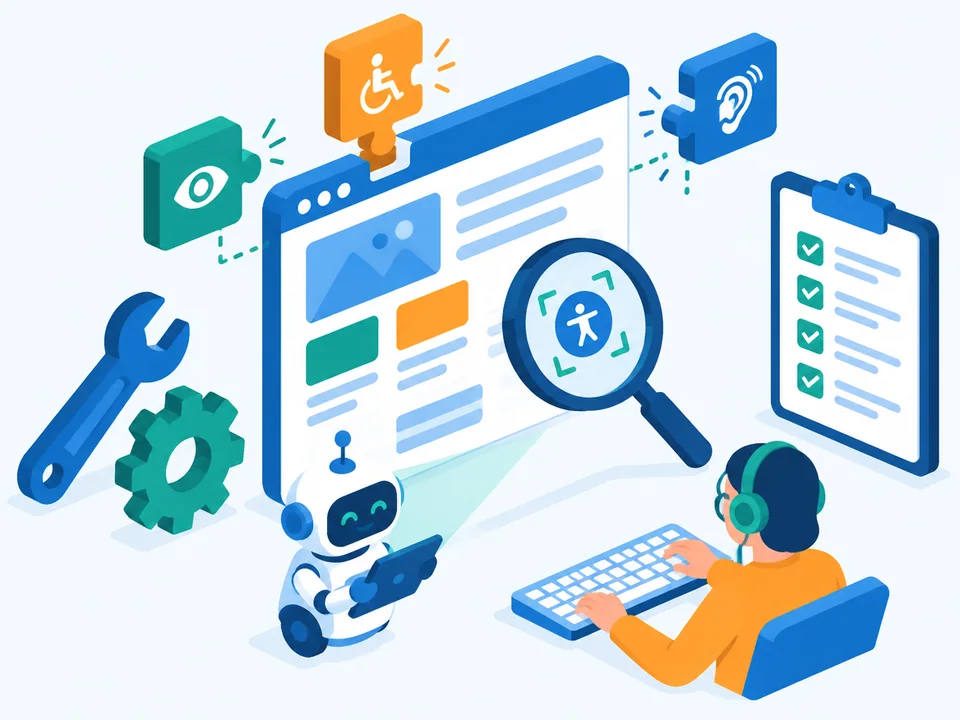
There are hundreds of plugins, browser extensions, and software platforms that promise to make a website ADA compliant. Some are very useful. None of them can do the whole job. A tool can find problems and help you manage them, but a person still has to fix the code, the content, and the design.
This guide sorts the tools into four groups, lists the ones we find most useful, and explains where automated tools stop and manual testing has to take over. It is general information, not legal advice.
Four Kinds of Accessibility Tools
CMS plugins
Run inside WordPress or another content system and check pages as you write and publish them.
Browser testing tools
Free extensions that scan the page you are viewing and explain each error. Work on any website.
Monitoring platforms
Paid services that crawl an entire site on a schedule and track issues over time.
Overlays and widgets
A script that adds a toolbar and tries to adjust the page in the visitor's browser. These do not make a site compliant.
WordPress Plugins for ADA Compliance
If your site runs on WordPress, these plugins help you find and prevent accessibility problems. Most have a capable free version.
Accessibility Checker
By Equalize Digital. Scans each post and page in the editor and lists errors and warnings with guidance on how to fix them. Our first recommendation for content teams.
WP Accessibility
By Joe Dolson. Corrects common theme problems such as missing skip links, weak focus outlines, and unlabeled fields, without changing your theme files.
Sa11y
Highlights content issues directly on the page for editors: missing alternative text, skipped heading levels, vague link text, and low contrast.
Editoria11y
A lightweight checker aimed at authors. It flags content mistakes as they are made and keeps a site-wide dashboard of open issues.
WP ADA Compliance Check Basic
Scans content for WCAG and Section 508 issues when it is saved. We have used it on client sites. The paid version adds full-site scans and automatic corrections.
Plugins that add a toolbar
Plugins such as UserWay or Ally add a visitor toolbar for text size and contrast. They can be a convenience, but they are overlays and do not replace fixing the site.
Plugins change often. Before installing one, check when it was last updated and whether it is tested with your version of WordPress.
Free Browser Testing Tools
These work on any website, whatever it is built with, and they are the tools professional auditors use every day.
- WAVE: a visual report of errors, contrast failures, and structure, from WebAIM. Available as a website and a browser extension.
- axe DevTools: a browser extension built on the axe engine, which powers many other testing products.
- Lighthouse: built into Chrome. Its accessibility audit gives a quick score and a list of failures.
- Accessibility Insights: a free Microsoft tool with automated checks and a guided manual assessment.
- IBM Equal Access Checker: a browser extension that tests against IBM's accessibility rule set.
- ARC Toolkit: a Chrome extension from TPGi that is strong on headings, landmarks, and link text.
Monitoring Platforms
Larger sites need scheduled scans of every page, with reports that show whether the number of issues is going up or down. These are paid products.
- Pope Tech: site-wide scanning built on the WAVE engine.
- axe Monitor: Deque's platform for scanning and tracking large sites.
- Siteimprove: accessibility monitoring combined with content quality and SEO checks.
- Level Access: an enterprise platform with testing, monitoring, and training.
- SortSite: a desktop and web crawler from PowerMapper that checks accessibility and broken links.
A platform earns its cost when someone is assigned to review the reports and act on them every month.
Do Overlays and Widgets Make a Website ADA Compliant?
No. Overlay products such as accessiBe, UserWay, AudioEye, and EqualWeb load a script that adds a toolbar and tries to repair the page in the visitor's browser. The underlying code stays the same, so many barriers remain, and the script can interfere with the assistive technology a visitor already uses.
Three facts are worth knowing before you buy one:
- Regulators have acted. In 2025 the Federal Trade Commission required accessiBe to pay $1 million to settle allegations that it misrepresented its automated product's ability to make any website WCAG compliant.
- Lawsuits continue. In October 2026, 107 of the 431 businesses sued over web accessibility were using a third-party widget or overlay at the time, according to UsableNet.
- Many accessibility professionals and users with disabilities oppose them because they can make a site harder to use with a screen reader.
A toolbar can be a reasonable extra for visitors who want larger text. It is not a substitute for an accessible website.
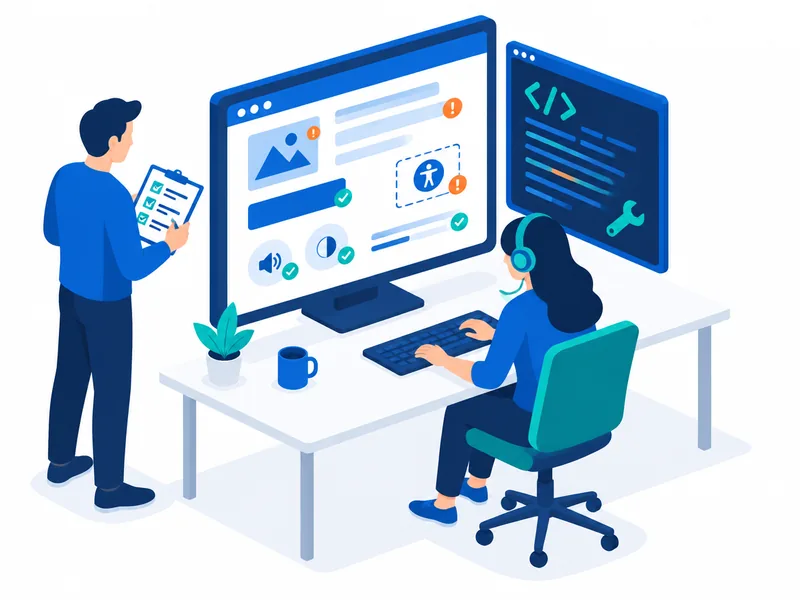
Automated Tools Versus Manual Review
Automated tools are fast and consistent, but they detect only a minority of WCAG issues. The rest need human judgment.
| Check | Automated tool | Manual review |
|---|---|---|
| Missing alternative text | Finds images with no alternative text | Judges whether the text actually describes the image |
| Color contrast | Measures text on solid backgrounds | Checks text over photos, gradients, and video |
| Keyboard access | Limited | Tabs through every menu, form, pop-up, and slider |
| Screen reader experience | Checks that labels and roles exist | Confirms the page makes sense when read aloud |
| Forms and error messages | Finds unlabeled fields | Tests whether a user can complete and correct the form |
| Video and audio | Cannot evaluate | Reviews captions, transcripts, and audio description |
| Checkout and booking flows | Scans one page at a time | Completes the whole process from start to finish |
A Practical Approach
1. Scan
Run WAVE or axe DevTools on your key templates and your most visited pages to find the obvious errors.
2. Test by hand
Use only the keyboard, then a screen reader, on the menu, forms, and checkout or booking flow.
3. Fix at the source
Correct the theme, templates, and content, and retest each fix. Do not rely on a widget to mask issues.
4. Monitor
Assign an owner, check new content with a plugin, and rescan the site every month.
Need Help With Your ADA Compliance Tools?
CaliNetworks audits websites against WCAG 2.2 Level AA using automated and manual testing, fixes the issues in the site itself, sets up the right plugin or monitoring tool for your team, and documents the work. Read about our ADA website compliance services.
Or call (805) 409-7700. Related guides: the WCAG standard, color contrast checkers, and lawsuit and settlement examples.
ADA Compliance Plugin Questions
Can a plugin make my website ADA compliant?
No. A plugin can find issues and fix a few common ones, but compliance depends on the site's code, content, and design. Someone still has to correct the problems the tool reports and test what the tool cannot.
What is the best free tool to check a website for accessibility?
WAVE and axe DevTools are the two we recommend first. Both are free browser extensions, work on any website, and explain each issue they find. Use them together with keyboard and screen reader testing.
Are accessibility overlays worth it?
Not as a compliance solution. Overlays do not change the underlying code, businesses using them are still sued, and the Federal Trade Commission has penalized an overlay vendor over its compliance claims. Fixing the site itself is the reliable approach.
How much of WCAG can automated tools test?
Only a minority of the requirements. Automated tools are good at finding missing alternative text, low contrast on solid backgrounds, and unlabeled fields. Keyboard access, screen reader behavior, captions, and multi-step processes need manual testing.
How often should I scan my website?
We recommend checking new content as it is published and scanning the whole site every month. Websites change constantly, and a site that passed last year can fail today after a redesign, a new plugin, or new content.
What Our Clients Are Saying
“The team at CaliNetworks has been amazing. Their expertise, along with clear communication and listening to our needs has already made a difference in our recruiting process, drawing more attention to our site, and the leads that have come to us are right o...”
“I needed help on multiple fronts with a website. Organic, design and PPC to name a few. The work has been great and I am very happy to have found them. Highly recommend.”
“I recently engaged CaliNetworks for digital marketing consultation for my website, and the experience has been nothing short of five-star! The team demonstrated a profound understanding of the digital landscape, providing innovative strategies and actionabl...”
Ready to Grow Your Business?
Talk with a Thousand Oaks digital marketing expert about AI search, SEO, PPC and website compliance.